



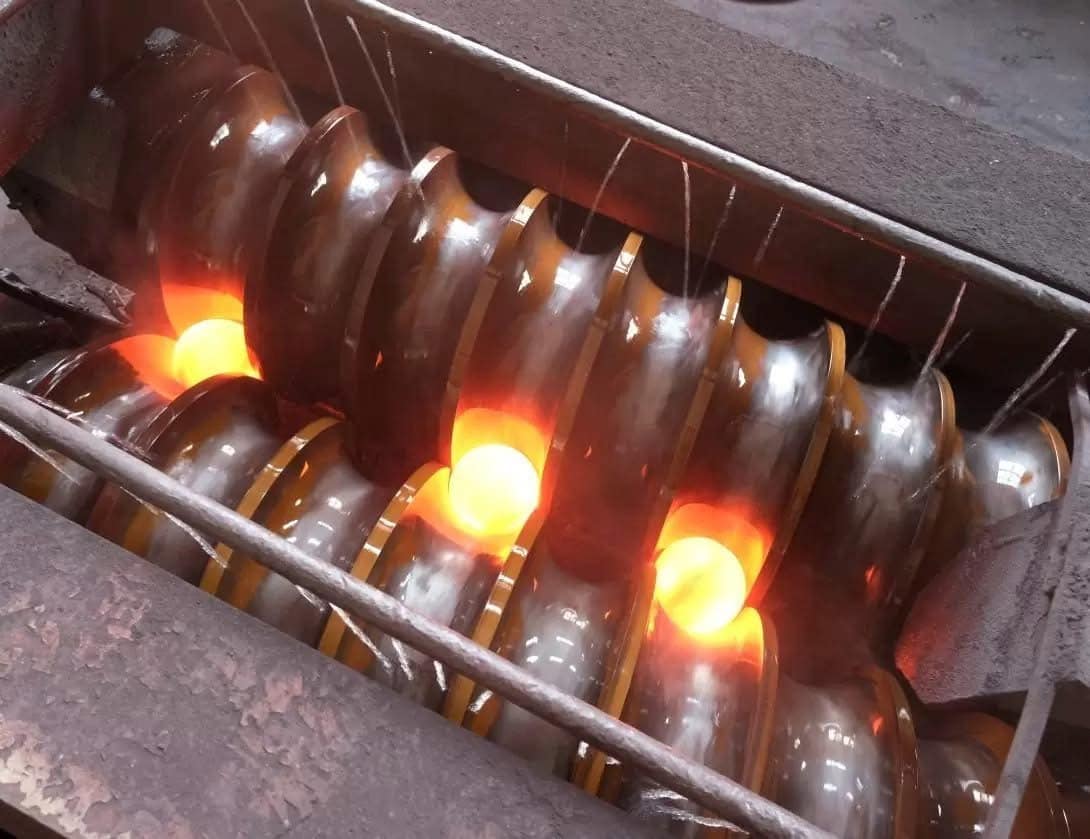
40mm forged grinding balls are a common grinding media size for replenishment in mining ball mills, especially in copper, gold, iron ore, lead-zinc and polymetallic mineral processing plants. In mining grinding operations, the diameter, hardness and wear resistance of grinding balls directly affect mill capacity, final particle size and steel consumption per ton of ore.
For many mining projects, 40mm forged steel grinding balls are used as regular make-up balls to maintain grinding efficiency, control media consumption and reduce the risk of breakage.
When purchasing forged steel grinding balls, buyers should not only compare the price per ton. The real operating cost also depends on wear rate, breakage rate, downtime, replenishment frequency and final grinding performance.
Main applications of 40mm forged grinding balls
40mm forged grinding balls are commonly used in medium and fine grinding stages. They are also one of the standard sizes for daily ball mill media replenishment in mining plants.
Common applications include:
- Copper concentrators.
- Gold processing plants.
- Iron ore grinding systems.
- Lead-zinc and polymetallic mines.
- Ball mills after SAG mills.
- Cement, building materials and some industrial grinding applications.
The advantage of the 40mm size is that it provides more contact points inside the mill. This helps improve grinding efficiency and achieve a more uniform particle size distribution.
Factor 1: surface hardness of HRC 58-65
High-quality 40mm forged grinding balls usually require a surface hardness of HRC 58-65. This hardness range helps the balls maintain good wear resistance under high-impact and high-friction grinding conditions.
If the hardness is too low, the balls will wear faster and the replenishment frequency will increase.
If the hardness is too high but toughness is insufficient, problems such as breakage, spalling or loss of roundness may occur.
Therefore, buyers should not only check the hardness number. They should also evaluate hardness stability, heat treatment quality and material uniformity.
Factor 2: core hardness determines real service life
Many customers focus only on surface hardness, but core hardness is also very important for mining operations.
For high-quality forged grinding balls, the core hardness of a 40mm ball can reach approximately HRC 56-63. Stable core hardness means the internal structure is more uniform and the ball can maintain better wear resistance during long-term grinding.
Stable internal hardness helps reduce:
- Uneven wear.
- Rapid loss of roundness.
- Excessive difference between surface and core hardness.
- Efficiency loss during continuous grinding.
For mines purchasing grinding balls for their own use, this is especially important because the key target is not only a lower initial price, but a lower total grinding cost per ton of ore.
Factor 3: low breakage rate matters more than low price
In mining operations, a high breakage rate can cause more losses than a small difference in price per ton.
Broken grinding balls reduce grinding efficiency, increase liner wear and may lead to downtime for cleaning and maintenance.
Good forged grinding balls should offer:
- Low breakage rate.
- Low out-of-round rate.
- Stable impact toughness.
- Uniform metallographic structure.
- Reliable performance in continuous grinding.
- Strong wear resistance for hard ores.
If the grinding conditions are severe, such as hard ore, high mill load or long grinding time, it is better to choose higher-quality forged balls rather than low-priced products with unstable performance.
Factor 4: export packaging and transportation
For markets such as Central Asia, South America, Africa and other mining regions, packaging and transportation also affect the customer experience.
40mm forged grinding balls are commonly packed in 1-ton big bags, which are convenient for loading, unloading, storage and inventory control at the mining site.
Before placing an order, buyers should confirm:
- Destination city.
- Port, railway station or border crossing.
- Whether door-to-door delivery is needed.
- Truck or container loading capacity.
- Required packaging method.
- Customs clearance documents.
- Special import requirements.
A reliable supplier should not only produce quality ball mill media, but also help customers arrange a clear and stable delivery solution.
Factor 5: supplier stability for bulk orders
Grinding balls are not a one-time sample product. For mining customers, they are long-term consumables. Therefore, supplier stability is as important as the quality of a single batch.
A reliable supplier of forged steel grinding balls should have:
- Stable raw material control.
- Mature forging process.
- Controlled heat treatment process.
- Batch hardness inspection.
- Experience in low breakage control.
- Export packaging experience.
- Continuous supply capacity.
- Experience with bulk mining orders.
If the customer needs monthly or quarterly replenishment, it is recommended to start with a trial order or one full truckload. Then the actual performance can be verified through on-site wear data before building a long-term purchasing plan.
Conclusion
40mm forged grinding balls are a practical and efficient size for mining ball mills. They are suitable for medium and fine grinding, daily replenishment and continuous operation in mineral processing plants.
Before purchasing, buyers should not compare only the price per ton. It is more important to evaluate surface hardness, core hardness, breakage rate, wear performance, packaging, transportation and supplier stability.
For mines that focus on long-term production cost, choosing more wear-resistant, stable and low-breakage grinding balls can often reduce the total grinding cost over time.
Shandong Gangyan Grinding Ball Co., Ltd. supplies forged and cast grinding balls for mining, cement, thermal power and industrial grinding applications. We can provide different sizes, hardness levels and packaging solutions according to the customer’s actual grinding conditions.
FAQ
What equipment are 40mm forged grinding balls mainly used for?
They are mainly used in mining ball mills. They can also be used after SAG mills, in fine grinding systems and in some industrial grinding equipment.
What hardness is suitable for 40mm grinding balls?
For high-quality products, surface hardness usually reaches HRC 58-65, while core hardness can reach approximately HRC 56-63. The final choice should depend on ore hardness and mill operating conditions.
What is the difference between forged and cast grinding balls?
Forged grinding balls usually have better toughness and lower breakage rate, making them more suitable for high-impact and heavy-duty mining grinding conditions.
How are 40mm grinding balls usually packed?
For export, the most common packaging is 1-ton big bags, which are convenient for loading, transportation, storage and handling at the customer’s site.
What should buyers focus on before purchasing?
Buyers should focus on hardness stability, breakage rate, actual wear performance, heat treatment quality, supplier experience and international delivery capacity.