



For mining buyers in Africa, purchasing forged grinding balls is not only about comparing the price per ton. Packaging, delivery terms, destination ports and export documents can also affect the final cost, delivery time and unloading process at the mine site.
Forged grinding balls are widely used in gold, copper, iron ore, manganese, zinc, lead and other mineral processing plants. Whether the buyer is located in Ghana, South Africa, Tanzania, Zambia, Zimbabwe, the Democratic Republic of Congo or other African mining regions, a clear quotation should include product specifications, packing method and delivery conditions.
Why Packaging Matters for Grinding Ball Orders
Grinding balls are heavy industrial consumables. If the packaging is not strong enough, problems may occur during loading, sea freight, inland transportation or unloading at the mine site.
Common risks include broken bags, scattered balls, difficult handling and delays at the warehouse or processing plant.
For this reason, buyers should confirm the packing method before placing an order.
One-Ton Jumbo Bags Are Common for Export
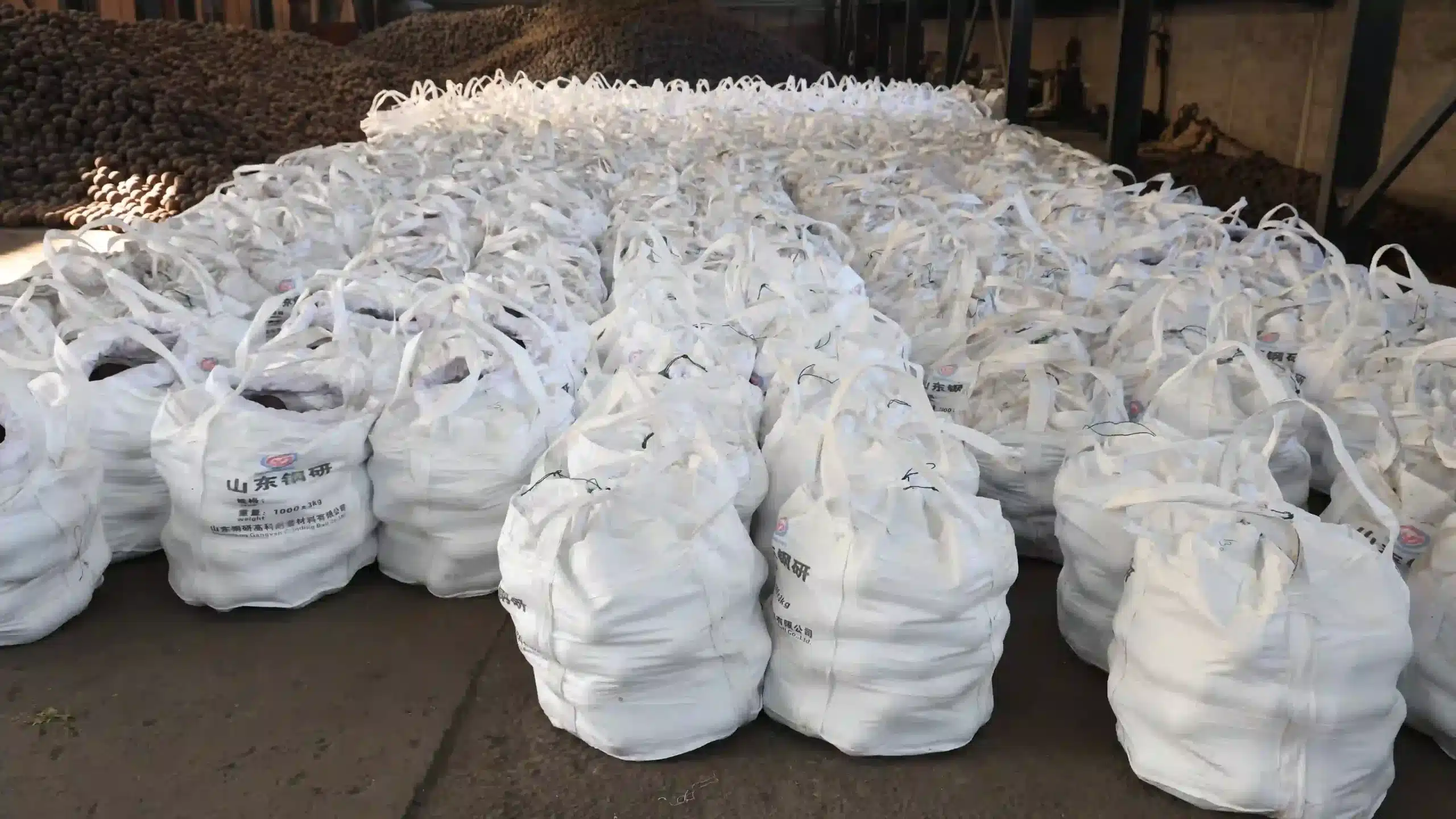
For international shipments, forged grinding balls are commonly packed in one-ton jumbo bags. This packing method is suitable for loading, lifting, storage and distribution at mining sites.
A standard packing solution may include:
- 1-ton jumbo bags
- Strong lifting loops
- Clear batch control
- Stable loading in containers
- Easy handling by forklift or crane
For African mining projects, one-ton jumbo bags are practical because many customers need to transport the goods from the port to inland mining areas.
FOB, CIF and DAP: Why Delivery Terms Change the Final Price
Different delivery terms include different responsibilities.
FOB means the supplier delivers the goods to the export port.
CIF includes sea freight to the destination port.
DAP includes delivery to the agreed destination, which may be a warehouse, city or mine site.
Before comparing quotations, buyers should confirm whether the price includes:
- Export inland transportation
- Sea freight
- Destination port charges
- Customs clearance
- Inland transportation in Africa
- Insurance
- Export documents
A lower price may not be better if it excludes important logistics costs.
Common Destination Ports for African Mining Buyers
Destination ports depend on the country and the mine location.
Common ports for African mining buyers include:
- Durban, South Africa
- Tema, Ghana
- Takoradi, Ghana
- Dar es Salaam, Tanzania
- Mombasa, Kenya
- Beira, Mozambique
- Maputo, Mozambique
- Walvis Bay, Namibia
- Pointe-Noire, Republic of Congo
- Matadi, Democratic Republic of Congo
For landlocked countries such as Zambia, Zimbabwe, Mali, Burkina Faso or parts of the DRC mining belt, inland transportation from port to mine site should be checked carefully.
What Documents Should Mining Buyers Request?
To avoid delays and misunderstandings, buyers should request complete export and quality documents.
Common documents include:
- Commercial invoice
- Packing list
- Bill of lading
- Certificate of origin
- Quality inspection report
- Technical specification sheet
- Chemical composition information
- Hardness test information
For forged grinding balls, quality documents are especially important because buyers need to confirm hardness, material and batch consistency.
Conclusion
A professional forged grinding ball quotation should include more than the product price. It should clearly show the diameter, hardness, packing, delivery terms, destination port and required documents.
For African mining buyers, confirming these details before purchase can reduce hidden costs, delivery delays and quality misunderstandings.
FAQ
What packing is commonly used for forged grinding balls?
One-ton jumbo bags are commonly used for export because they are suitable for loading, lifting, storage and mine site handling.
Which ports are common for African mining customers?
Common ports include Durban, Tema, Takoradi, Dar es Salaam, Mombasa, Beira, Maputo, Walvis Bay, Pointe-Noire and Matadi.
What is the difference between FOB, CIF and DAP?
FOB covers delivery to the export port, CIF includes sea freight to the destination port, and DAP includes delivery to the agreed destination.
Why are quality documents important?
They help confirm hardness, chemical composition, batch quality and whether the product matches the agreed specifications.
What should buyers confirm before ordering?
Buyers should confirm diameter, quantity, hardness, packing method, delivery term, destination port and export documents.