



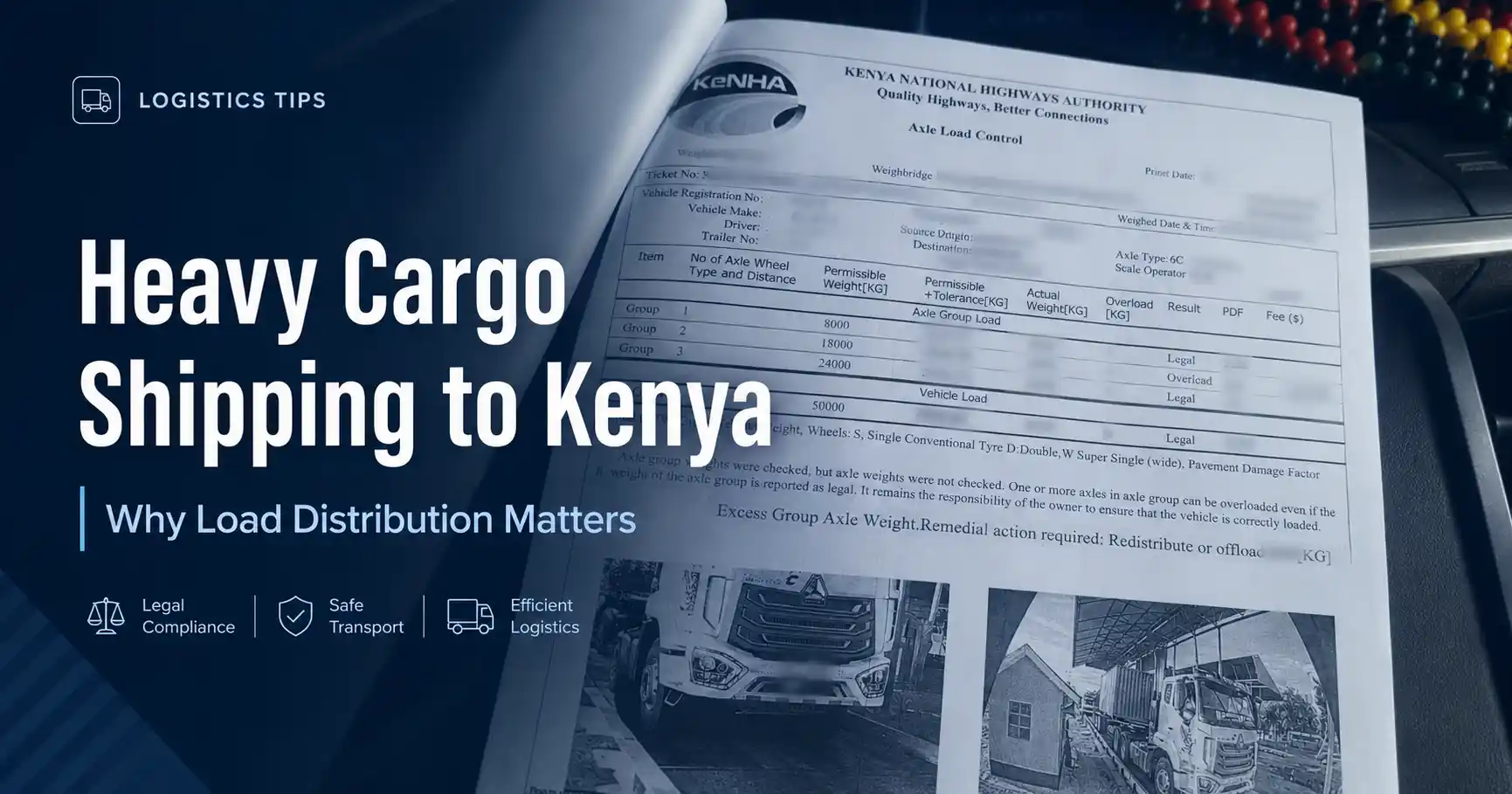
When shipping heavy cargo to Kenya, total weight is not the only factor that exporters should consider. For high-density products such as forged grinding balls, proper load distribution inside the container and on the truck is also very important.
Many exporters focus mainly on the total cargo weight, container capacity, ocean freight, and customs documents. These are all important, but for heavy industrial products, load distribution can also affect inland transportation after the cargo arrives.
For products such as forged grinding balls, steel products, mining spare parts, and other high-density cargo, uneven loading may cause axle overload even when the total gross vehicle weight is within the legal limit.
Heavy Cargo Shipping Is Not Only About Total Weight
In international logistics, many people believe that if the total weight is legal, the shipment should be safe for transportation. However, this is not always true.
For heavy cargo, the way the weight is distributed can be just as important as the total weight itself.
Forged grinding balls are high-density cargo. They are usually packed in jumbo bags or steel drums, and each package can be very heavy. If too much weight is concentrated in one area of the container or truck, it may affect the balance during inland transportation.
This is why proper container loading is an important part of heavy cargo shipping to Kenya and other African inland destinations.
What Is Axle Load Control in Kenya?
During inland transportation in Kenya, trucks may pass through axle load control stations. These stations are used to check whether the vehicle load is within the allowed limit and whether the axle weight is properly distributed.
Axle load control is important for road protection and transportation safety. For exporters, freight forwarders, and trucking companies, it means that cargo should be loaded and distributed carefully before inland transportation.
Even if the gross vehicle weight is legal, one axle group may still be overloaded if the cargo is not evenly distributed.
Why Uneven Load Distribution Can Cause Problems
Uneven load distribution can create problems during inland transportation.
For example, the total vehicle weight may be within the legal limit, but one axle group may carry too much weight. In this situation, the truck may be required to redistribute the cargo or offload part of it before continuing the journey.
This can lead to:
- Additional handling work
- Transportation delays
- Extra logistics costs
- Changes in delivery schedule
- Higher risk during inland transportation
For customers waiting for mining supplies, cement plant materials, or industrial goods, these delays may affect production planning. That is why proper load distribution should be considered before the cargo leaves the factory or port.
Why Forged Grinding Balls Need Special Attention
Forged grinding balls are commonly used in mining, cement, power plants, and mineral processing industries. Because they are heavy and dense, they need careful packing and loading.
Compared with light cargo, forged grinding balls do not take up much space, but they add significant weight. If the loading plan only focuses on filling the container and ignores weight balance, problems may appear during inland transportation.
For forged grinding balls, proper loading is not only a logistics detail. It is part of delivery quality.
A reliable supplier should not only provide stable hardness, good wear resistance, and consistent product quality, but also pay attention to packing, loading, documentation, and transportation follow-up.
How Exporters Can Reduce Axle Overload Risks
To reduce axle overload risks during heavy cargo shipping to Kenya, exporters can take several practical steps.
First, the total cargo weight should be checked before loading. For high-density products, it is important to avoid exceeding container and transportation limits.
Second, cargo should be distributed as evenly as possible inside the container. Jumbo bags, steel drums, or other heavy packages should not be concentrated in one section.
Third, exporters should communicate with the freight forwarder and trucking company in advance. This helps ensure that the loading plan is suitable for both sea transportation and inland transportation.
Fourth, export documents should be prepared properly. For international shipments, documents and compliance are just as important as the cargo itself.
Finally, transportation status should be followed after the goods arrive at the destination port. Good logistics follow-up can help customers reduce unnecessary delays and risks.
Our Experience in Heavy Cargo Export
At Shandong Gangyan Grinding Ball Co., Ltd., we focus not only on the quality of grinding balls, but also on safe packing, proper loading, export documentation, and smooth delivery.
For customers in mining, cement, power plants, and mineral processing industries, reliable supply means more than manufacturing the product. It also means helping the cargo move safely and efficiently from our factory to the final destination.
Heavy cargo shipping requires experience. From container loading to inland transportation, every small detail can affect the final delivery.
Conclusion
When shipping heavy cargo to Kenya, total weight is not the only factor. Proper load distribution is also important, especially for high-density products such as forged grinding balls.
Uneven loading may cause axle overload during inland transportation, even when the gross vehicle weight is legal. To reduce this risk, exporters should pay attention to total weight, cargo placement, container loading, trucking requirements, and logistics follow-up.
For forged grinding balls and other heavy industrial cargo, good supply is not only about product quality. It is also about helping customers avoid unnecessary risks during the whole shipping process.
FAQ
Why is load distribution important when shipping heavy cargo to Kenya?
Load distribution is important because uneven cargo placement can cause one axle group to be overloaded, even when the total vehicle weight is within the legal limit.
What is axle load control in Kenya?
Axle load control in Kenya refers to the checking of vehicle weight and axle group weight during inland transportation. It helps protect roads and improve transportation safety.
Can total vehicle weight be legal but axle weight overloaded?
Yes. The gross vehicle weight may be legal, but if the cargo is not evenly distributed, one axle group may still be overloaded.
Why do forged grinding balls need careful loading?
Forged grinding balls are high-density cargo. They are heavy and compact, so improper loading may concentrate too much weight in one area of the container or truck.
How can exporters reduce axle overload risks?
Exporters can reduce risks by checking total weight, distributing cargo evenly, avoiding concentrated loading, communicating with freight forwarders, and following up on inland transportation.
Are forged grinding balls suitable for 20ft container shipping?
Yes. Forged grinding balls are commonly shipped in 20ft containers, usually packed in jumbo bags or steel drums. However, total weight and load distribution should be carefully controlled.
Need Forged Grinding Balls for Mining or Cement Grinding?
Shandong Gangyan Grinding Ball Co., Ltd. supplies forged steel grinding balls for mining, cement, power plants, and mineral processing industries.
We provide stable quality, proper packing, professional loading support, and export experience for heavy cargo shipments.
Contact us to discuss your grinding ball requirements and shipping plan.