
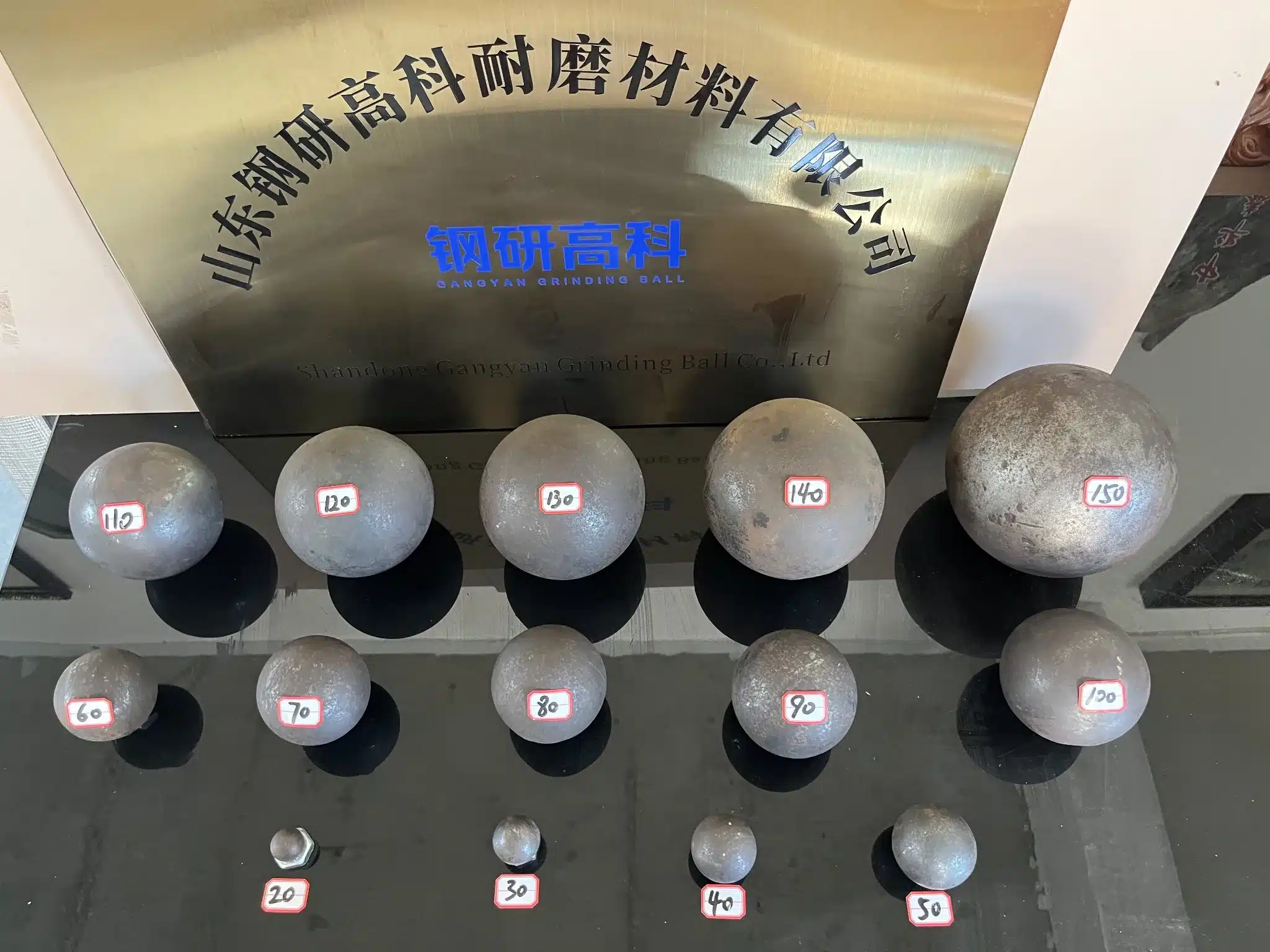
When purchasing grinding balls for mining operations, an RFQ often includes several diameters rather than one size. Different mills or stages of a grinding circuit may require different sizes. If the quantity, material and delivery basis are unclear, supplier quotations may rely on different assumptions and become difficult to compare.
1. List each diameter and its tonnage separately
State the required quantity for every diameter, not only the combined tonnage. For example:
| Diameter | Material | Quantity |
|---|---|---|
| 2 inches | B2 | 30 MT |
| 3 inches | B2 | 40 MT |
| 4 inches | B3 | 30 MT |
| Total | 100 MT |
This is an illustrative example, not a recommended charge mix. Confirm actual sizes and quantities against your purchasing specification and operating requirements.
2. Specify the material grade and technical requirements
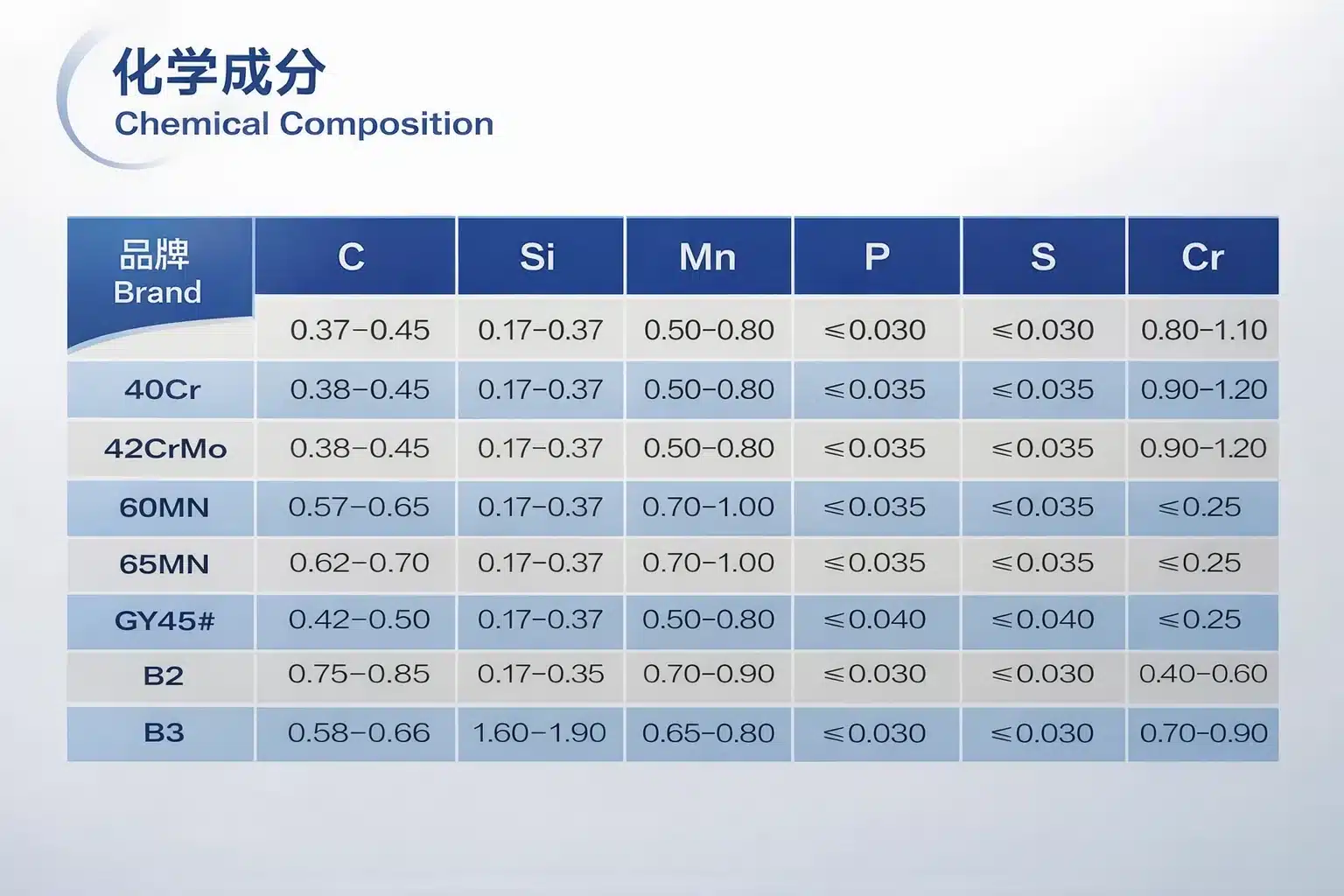
Identify the required grade for each diameter. Do not assume that all sizes must use the same material. If available, attach the approved specification covering chemical composition, surface and core hardness, dimensional tolerance, inspection method and required documents. The chemical-composition chart below is a reference visual; the applicable grade limits and acceptance criteria must be confirmed for the specific order.
3. Define the delivery basis
State the Incoterms rule and named place: for example EXW, FOB, CFR, CIF with the destination port, or DAP with the delivery address. A factory price and a delivered price are not directly comparable unless freight, insurance, destination charges and inland transport responsibilities are clear.
4. State packaging and shipment requirements
Indicate the requested packaging, such as 1 MT jumbo bags, steel drums or bags on pallets, if already specified. Explain whether different diameters must be packed and marked separately. The supplier can then assess loading and handling arrangements against the actual route and carrier limits.
5. Include schedule, payment and inspection requirements
Specify the expected order date, required delivery window, whether shipments will be split, proposed payment terms and any third-party inspection or documentation requirements. For recurring or staged deliveries, provide the quantity and timing for each shipment.
6. Copy-ready grinding ball RFQ template
Buyer information
Company: ______ | Contact: ______ | Country: ______ | Email/WhatsApp: ______
Product requirements
| Diameter | Material grade | Quantity (MT) |
|---|---|---|
| ______ | ______ | ______ |
| ______ | ______ | ______ |
| ______ | ______ | ______ |
| Total | ______ |
Commercial requirements
- Incoterms and named destination: ______
- Packaging: ______
- Required delivery date / shipment schedule: ______
- Payment terms: ______
- Technical specification and inspection documents: ______
7. Compare quotations on an equivalent basis
Compare each diameter and quantity, material grade, agreed technical requirements, inspection documents, packaging, delivery term, payment and schedule. A lower unit price is not necessarily a lower delivered cost. Make sure the quoted scope is the same before evaluating suppliers.
8. Work with a manufacturer
Working directly with a manufacturer can simplify coordination of several diameters, production planning, packaging and inspection records. Shandong Gangyan Grinding Ball Co., Ltd. manufactures forged steel grinding balls for mining ball mills and SAG mills. Explore our forged steel grinding balls and learn about our manufacturing and quality control.
Frequently asked questions
Can one RFQ include several diameters?
Yes. List each diameter, material grade and tonnage separately.
Should I provide total tonnage or tonnage per diameter?
Provide both. The per-diameter breakdown is essential for an accurate quotation.
Can different diameters have different material grades?
Yes. State the required grade for each size and attach the applicable specification.
What is needed for a CIF quotation?
Provide product details, quantities, packaging and the destination port.
Do I need mill operating data for a commercial quotation?
Not always. Diameter, grade, quantity and delivery requirements are the basic commercial inputs. Operating data may be needed when technical selection is also requested.
Request a quotation
Send us your required diameters, material grades and tonnage for each diameter, together with your destination port or delivery location and preferred trade terms. Our team will review the requirements and prepare a quotation based on the specified products and delivery conditions.